There are many reasons for members of Congress to be wary of earmarks included in the Senate’s draft appropriations bills for fiscal year (FY) 2026. Some funnel tax dollars to
left-wing activists. Others support
medical groups that perform abortions and facilitate transgender procedures on minors. Many are wasteful
boondoggles.
An additional consideration for legislators is that earmarks, which primarily fund local projects, can enable poor governance. If Washington covers the cost of core
state and local responsibilities, that can make it easier for elected officials to misuse state and local tax dollars.
California is rapidly becoming the prime example of poor governance in the United States. It spends
astronomical amounts in both absolute and per capita terms, including a multi-billion dollar scheme to launder federal Medicaid payments to give medical benefits to illegal immigrants. Heavy regulations and high taxes cause hundreds of thousands of Californians to
flee the state every year despite its natural beauty.
In this context, Congress giving earmarks of questionable national value to California serves to subsidize governmental failure in the Golden State. As Sacramento struggles to avoid
big budget deficits, its representatives hope for as many handouts from Uncle Sam as possible.
Legislators should not be pressured into rubber-stamping wasteful and corruptive earmarks as part of the process of funding the federal government. Holding national defense, border security, and other core duties hostage to pork barrel requests would represent the worst aspects of Washington D.C.’s political culture. In addition, with the federal budget on an unsustainable trajectory due to
excessive spending, there is no excuse for Congress to single out questionable projects as funding priorities.
While California would receive dozens of earmarks if Congress approves the Senate’s FY 2026 “
Congressionally Directed Spending” items, two examples particularly highlight the ways in which federal funding could serve to enable and encourage misgovernance.
1. Pedestrian Signals and the Homeless Industrial Complex
Sen. Alex Padilla (D-CA) wants the federal government to give California a $1.5 million earmark for pedestrian safety signals in San Francisco.
That this project would be funded through Highway Infrastructure Programs is telling. Congress has allowed the
Highway Trust Fund’s focus to degrade, with local responsibilities such as street crossings and sidewalks qualifying for “highway” dollars.
What makes this project stand out from similar transportation earmarks is its location: the Tenderloin neighborhood. Situated in one of the wealthiest urban areas in human history, the Tenderloin neighborhood is notorious as a focal point of
crime,
homelessness,
drug use,
public defecation, and other types of disorder.
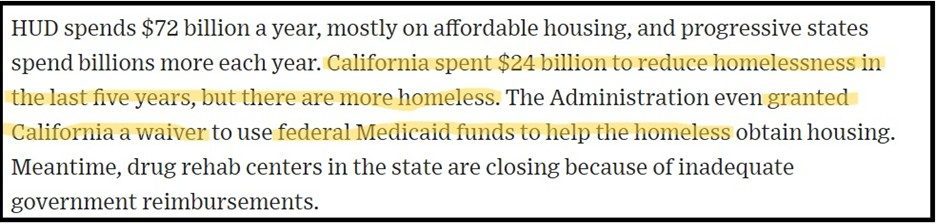
This is not due to neglect or a lack of taxpayer-funded resources - quite the opposite. California spends
billions of dollars per year on homelessness.
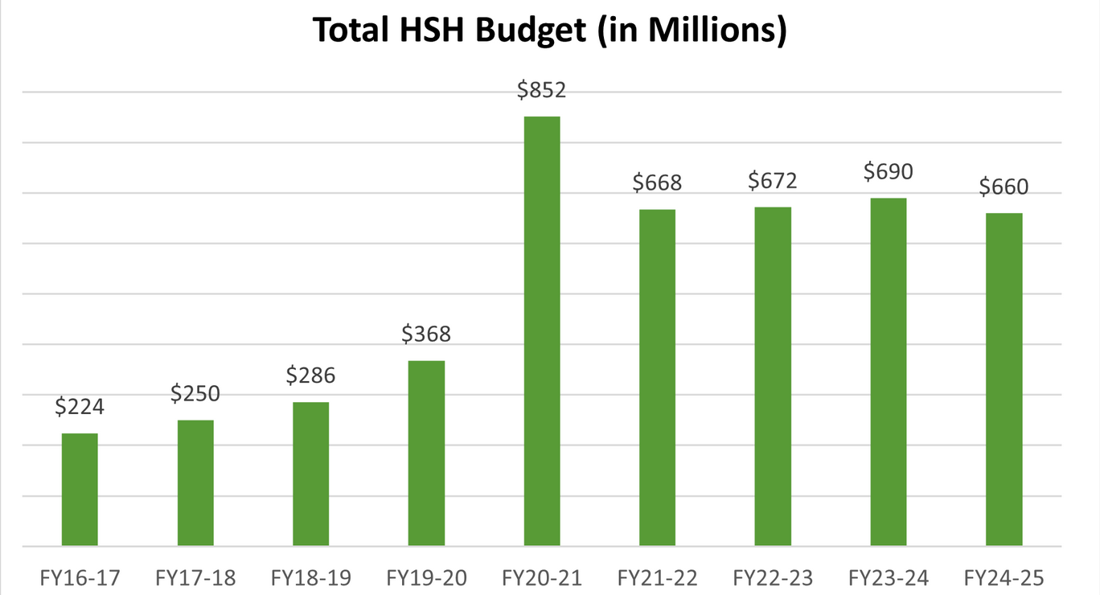
San Francisco’s Homelessness and Supportive Housing (HSH) department has received a
budgetary windfall in recent years.
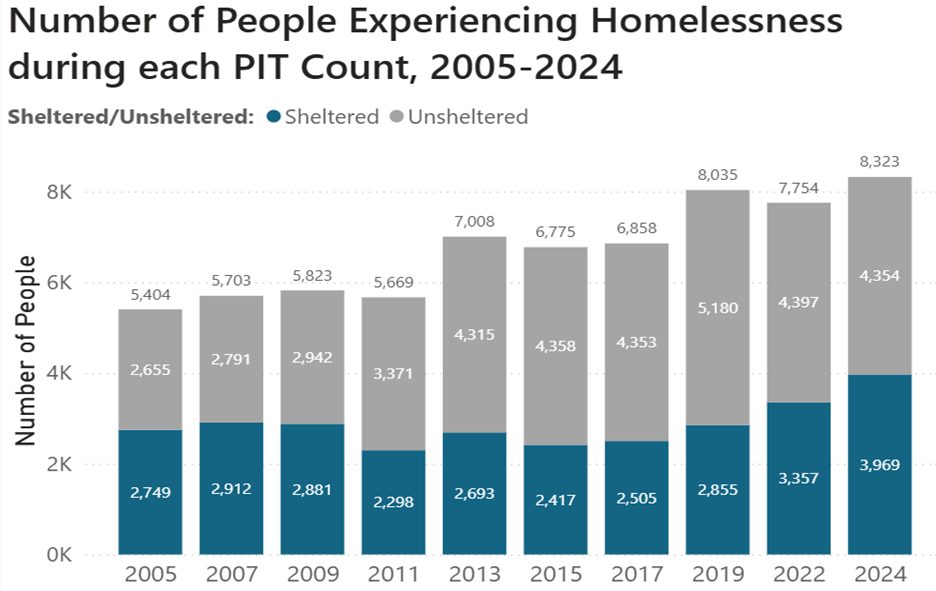
The spending is remarkably high when compared to the
number of homeless individuals in San Francisco. The HSH department’s budget is roughly $80,000 per year per homeless person.
This spending, however, is not addressing the problem effectively. The city government expects that only one in four homeless people entering the system will become housed.

The cause of this remarkable and ineffective expense is a combination of bureaucratic overlap and a collection of
non-governmental organizations (NGOs) often referred to as the
Homeless Industrial Complex.

The homelessness NGOs have become a
political force in the city. Taxpayers and businesses in the area are
pushing back against activities such as handing out
drug consumption tools, which attracts addicts to distribution locations.
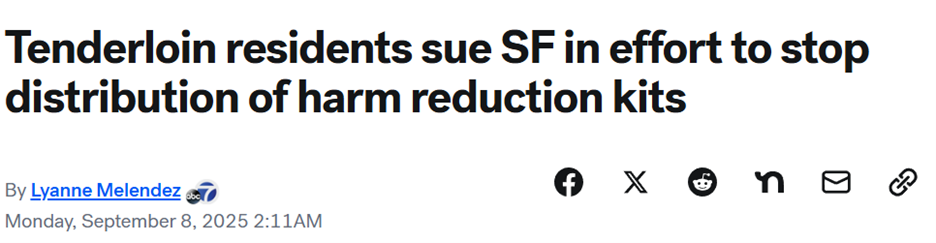
Federal legislators should understand that paying for local responsibilities such as street infrastructure makes it easier for irresponsible governments to waste money elsewhere. Thus, while the $1.5 million Tenderloin safety signal project is not a direct subsidy for the cadres of ineffective NGOs operating in and around the neighborhood, it has the same effect.
The question is not whether there should be functional pedestrian crossings in San Francisco’s Tenderloin neighborhood. Instead, the question ought to be who should pay for the infrastructure. San Francisco has sufficient resources to cover the cost, yet it has inappropriately sought Sen. Padilla’s help in securing federal funds.
Earmark Details
Bill: Senate
Transportation, Housing & Urban Development
Program: Highway Infrastructure
Recipient: California
Project: $1.5 million for pedestrian safety signal upgrades in Tenderloin neighborhood
Sponsor: Sen. Alex Padilla (D-CA)
2. Wi-fi Coverage for Barely Used Train Segment
Sen. Alex Padilla (D-CA) wants the federal government to give California’s Santa Clara County a $1.1 million earmark to provide wi-fi service to Caltrain passengers in the southern part of the county. While this project would be funded by the Transit Infrastructure Grants program, that funding is still derived from the Highway Trust Fund, even though transit users do not pay into the fund.

While the northern portion of the county is home to the high wealth “Silicon Valley” technology hub, the southern portion is much less dense.
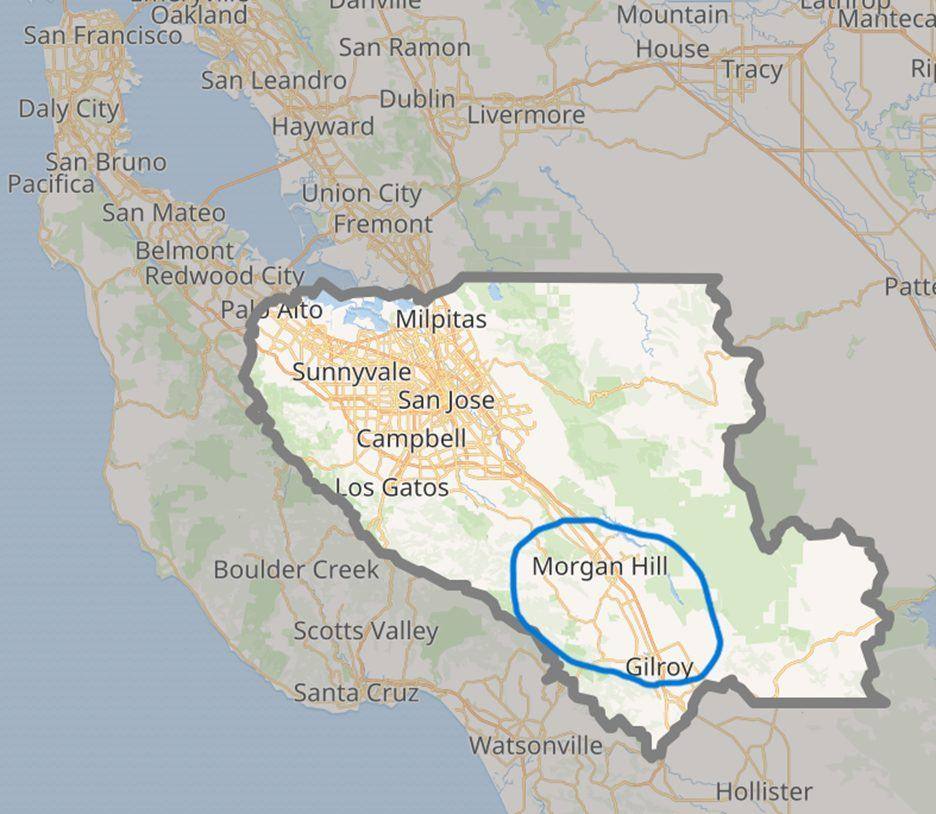
The Caltrain passenger rail system offers
commuter service from San Francisco to Gilroy. However, ridership is far from evenly distributed. Stations in the area covered by the earmark request average
100 or fewer passengers per day, meaning relatively few people would benefit.
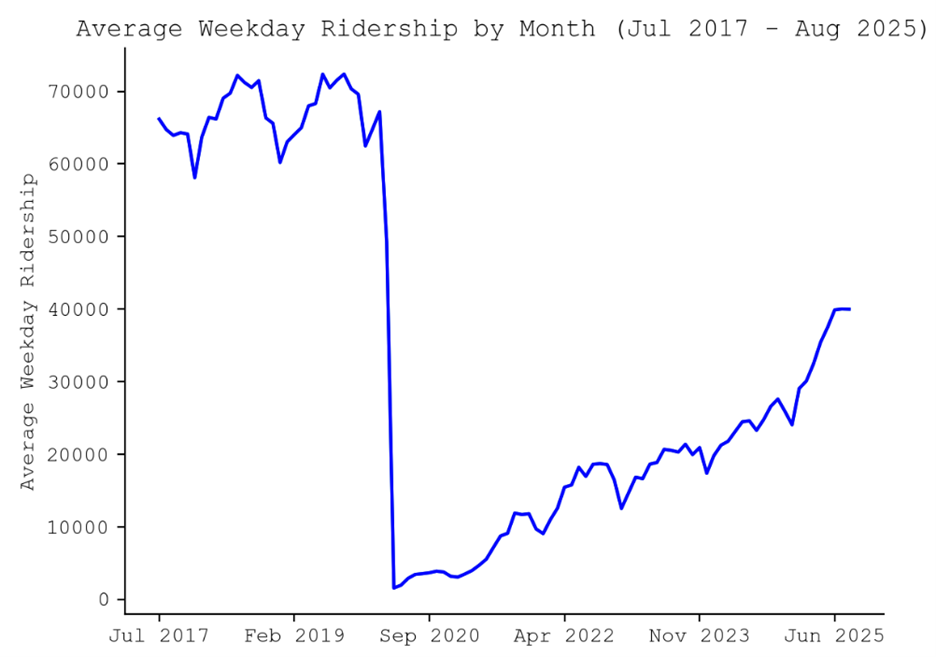
Meanwhile, Caltrain ridership is still
markedly below pre-pandemic levels.
The judiciousness of federal funding of a new amenity for commuter train riders in California is especially questionable when considering that the Sacramento
recently announced a 20 year tax-and-spend agreement to fund the state’s notorious “high-speed rail”
boondoggle.
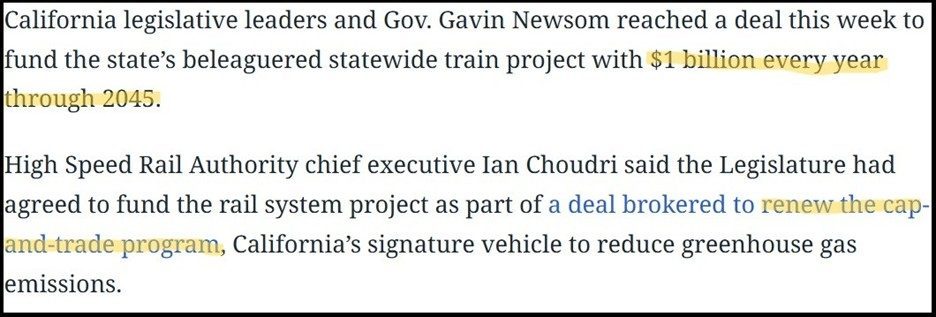
While the federal Department of Transportation has wisely
removed support for the high-speed rail debacle, paying for low-value initiatives such as the Santa Clara wi-fi earmark makes it easier for California to continue wasting tax dollars elsewhere.
Earmark Details
Bill: Senate
Transportation, Housing & Urban Development
Program: Transit Infrastructure
Recipient: Santa Clara County
Project: $1.1 million for South County Service wi-fi project
Sponsor: Sen. Alex Padilla (D-CA)
Congress should not only reject earmarks that enable poor governance in states such as California but also reject
earmark political culture generally. With the
gross national debt surging ever higher, foregoing earmark pork would signal that legislators are finally taking the problem of wasteful spending seriously.