The One Big Beautiful Bill (OBBB) makes common sense improvements to the Food Stamp program that promote opportunity and address waste, fraud, and abuse.
Despite unfounded claims about “slashing benefits,” these reforms would modestly roll back excessive spending increases to the Food Stamp program and direct resources to the most vulnerable Americans.
What the OBBB Actually Does
The
changes made by the OBBB are common sense. The OBBB:
- Strengthens and enforces work requirements for able-bodied adults
- Requires states with high improper payment rates to contribute modest program funding
- Rebalances administrative funding with states that run the program
- Ensures that benefits grow each year with inflation, but prohibits Presidents from unilaterally modifying the benefit formula as President Biden did
- Cracks down on gimmicks used to game the benefit formula
- Restricts eligibility for illegal aliens
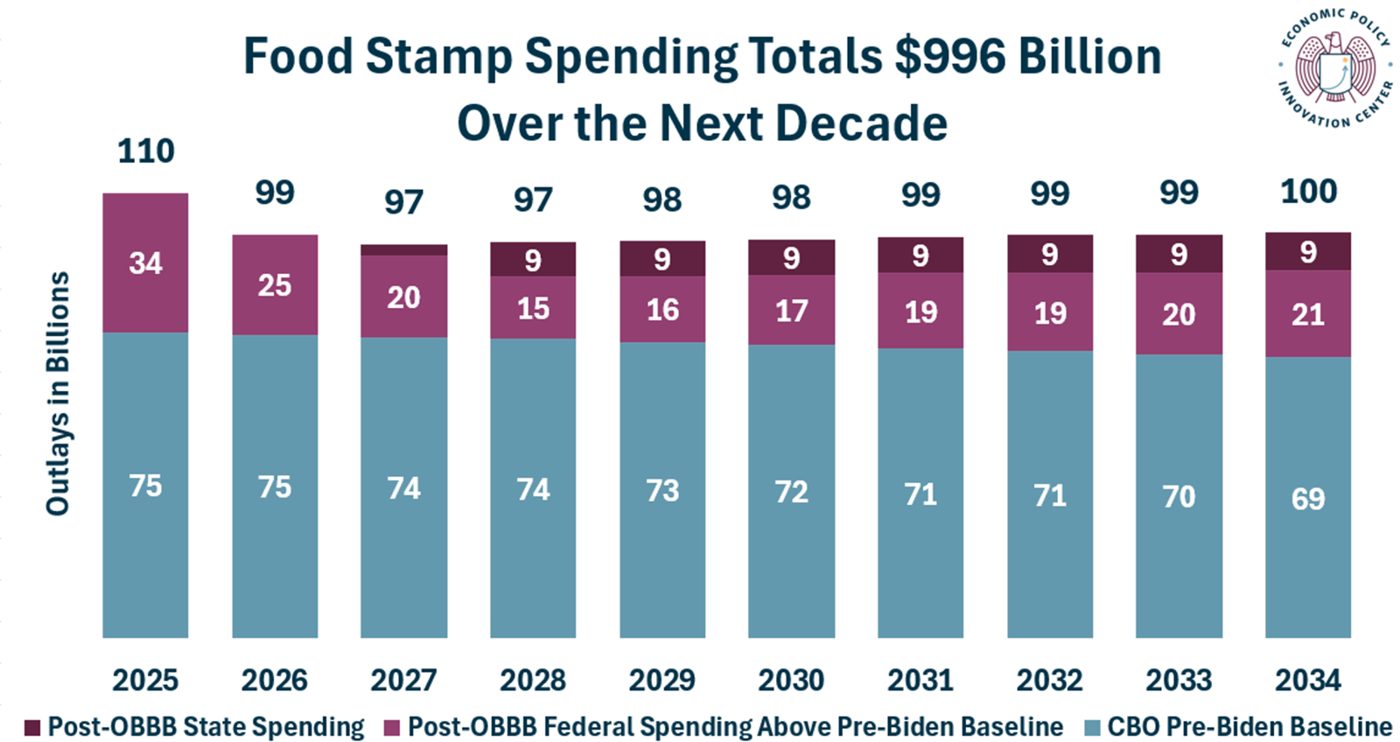
After OBBB, Food Stamp Spending Totals $996 Billion over the Next Decade
After implementation of the OBBB, federal and state expenditures for Food Stamps are projected to total $996 billion over the next decade.
Annual spending would be at least 50% higher in each year than the 2019 pre-COVID Food Stamp level.
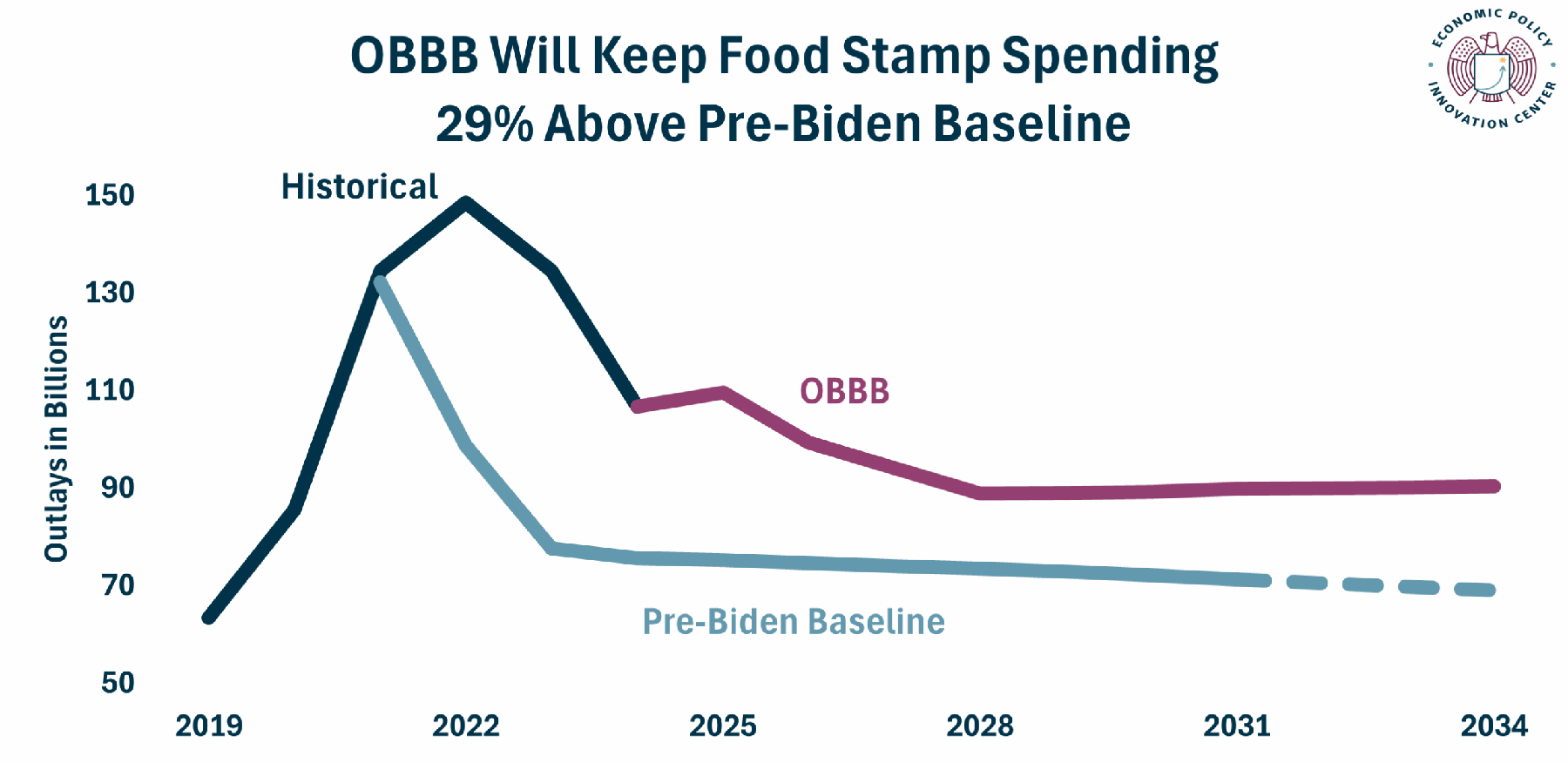
OBBB Keeps Federal Food Stamp Spending 29% Above the Pre-Biden Baseline
Federal expenditures for Food Stamps over the next decade will remain well above the pre-Biden projections.
Spending between FY 2025 and 2034 would total $207 billion, or 29%, above an extrapolation of the pre-Biden baseline published by the Congressional Budget Office (CBO) in February 2021.
Biden’s Food Stamp Spending Blowout Would Have Increased Spending 54%
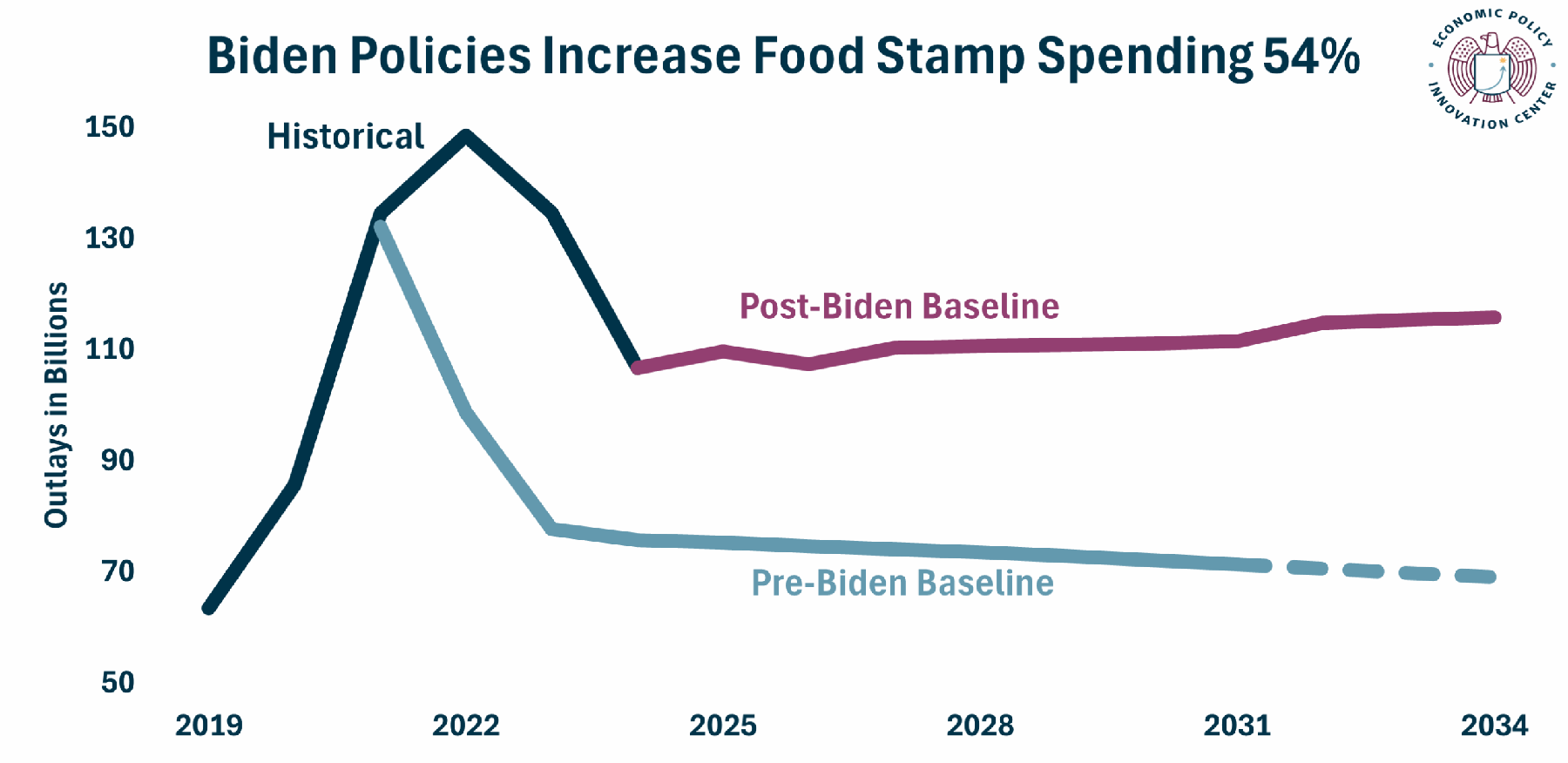
President Biden’s policies massively increased spending on Food Stamps. Spending in FY 2025 is 73% higher than it was in 2019.
The CBO projected that Food Stamp spending would have been $394 billion (54%) higher between FY 2025 and FY 2034 than the pre-Biden baseline.
The Biden Administration took several steps to
intentionally and permanently increase the level of Food Stamps spending:
- Biden unilaterally increased Food Stamp benefits in 2021 by 21% above inflation through a “reevaluation” of the Thrifty Food Plan, which is used to calculate benefit levels.
- The American Rescue Plan Act increased the maximum Food Stamp benefit by 15% through September 30, 2021.
- The Biden Administration extended Food Stamp emergency allotments through February 2023, even after President Biden declared “the pandemic is over.”
The OBBB Protects the Most Vulnerable
The OBBB makes important improvements to the Food Stamp program. These reforms would address waste, fraud, and abuse by closing loopholes and requiring states to do a better job of administering the program. This will put the Food Stamp program on a more sustainable path and re-prioritize resources for those who need them the most.