The Trump Administration’s fiscal year (FY) 2027
budget request focuses on providing guidance to Congress for appropriations legislation. This “skinny” budget generally avoids the topic of mandatory spending, since the primary way that a President’s Budget affects the legislative process is through appropriations.
Naturally, the FY 2027 request has many similarities to the
FY 2026 request. There is a push for focusing resources on national defense, a call to use
budget reconciliation to address near-term military capacity, and a series of themes that explain why President Trump seeks to increase and decrease particular spending accounts. However, there is also a significant departure, with a call for increasing total discretionary spending to enable a sizeable expansion of national defense.
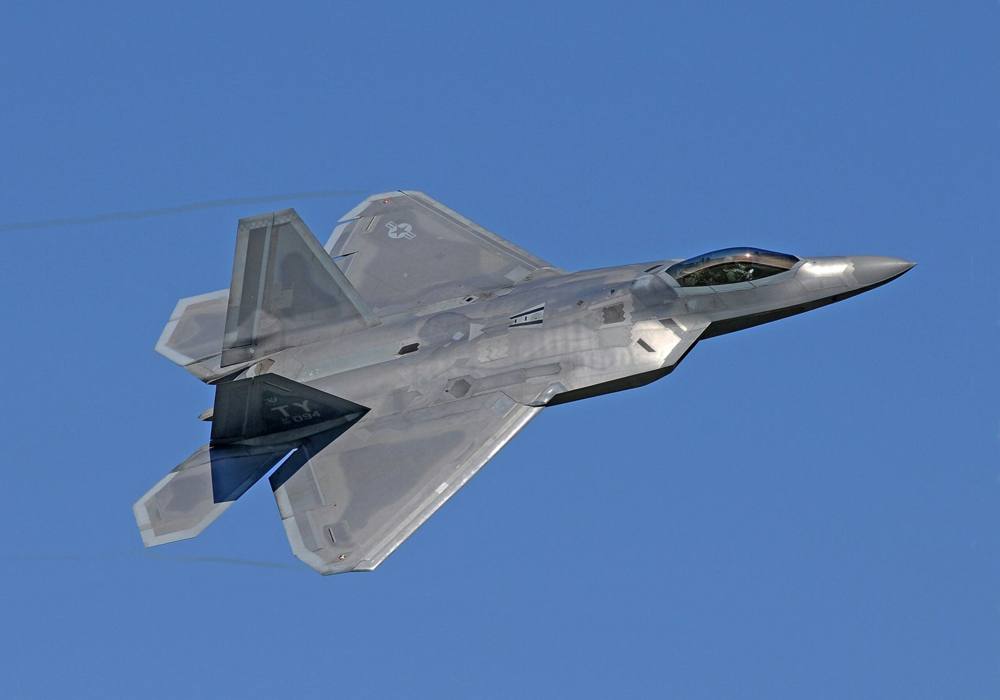
Toplines: Historic Request for Defense, Overall Increase
The administration’s $1.814 trillion topline for “base” discretionary appropriations budget authority (BA) is comprised of $1.154 trillion for defense and $660 billion for non-defense. While this would be an increase of more than 10% overall compared to the FY 2026 topline (roughly
$1.64 trillion, though Homeland Security remains unfinished), there are significant differences in agency-by-agency requests.
The enacted
FY 2026 discretionary BA for the defense category is $903 billion, meaning that the FY 2027 request of $1.154 trillion would be a 27.8% increase. This boost is not merely for FY 2027: the outyear defense budget grows to $1.284 trillion in FY 2028 and $1.355 trillion in FY 2036.
For the FY 2027 to 2036 period, this would mean a combined $2.9 trillion increase for national defense appropriations compared to the
CBO baseline estimate.
In addition, the administration requests $350 billion in “mandatory” defense supplemental funding, which would occur through budget reconciliation. This would follow the $155 billion in
supplemental defense funding provided by the One Big Beautiful Bill Act (OBBB). Combined, the total FY 2027 defense request is $1.504 trillion. It is worth noting that there is no supplemental funding assumed in outyears.
For non-defense discretionary BA, the administration requests a reduction of more than 10% from FY 2026 levels. However, this is less ambitious than the FY 2026 request, which matched defense increases with non-defense decreases to produce a flat topline. The FY 2027 request’s larger defense increase and smaller non-defense decrease results in a larger topline.
Savings: Targeting Wasteful Agencies and Programs
The President’s FY 2027 request contains cuts in many of the same places as the FY 2026 request, with the
reasoning broadly matching as well.
The Biden Administration poured tremendous taxpayer resources into wasteful programs that would supposedly benefit the environment but were functionally subsidies for favored industries and left-wing activists.
The Trump Administration aims to end this
“green” waste through reductions to the Environmental Protection Agency, Department of Energy, and several troubled grant programs. There is also a request to cancel funds created by the 2021 infrastructure package, such as an
electric vehicle charging station program that has become an infamous failure.
The FY 2027 request seeks a $15.5 billion reduction to the
State Department and related international programs, with a focus on reducing spending on foreign aid. These programs are premised on alleviating poverty, but in practice many funds go to “middle-income” countries. More fundamentally, handouts from America cannot fix government-made barriers that prevent
economic prosperity.
The
Department of Health & Human Services FY 2027 request is $15.4 billion less than FY 2026 through a combination of proposed reorganization efficiencies, federalism, and streamlining the welfare state. These principles also apply to the
Department of Housing and Urban Development request, which has $7.2 billion in net savings.
A variety of programs that are either racially discriminatory or have been hijacked by radical activists also receive
justified scrutiny in President Trump’s request. While the dollar amounts are not staggering by the standards of the federal budget, the existence of these programs is anathema to America’s core values.
Although the National Aeronautics and Space Administration’s Artemis II mission has earned praise, its budget is loaded with questionable projects. The
FY 2027 request would save billions by eliminating low-priority missions.
The FY 2027 request also contains bureau and program eliminations long sought by conservatives, such as the Economic Development Administration and the Essential Air Service boondoggle for tiny high-cost airports.
These savings proposals require action by Congress. While the House Appropriations Committee followed many of the Trump Administration’s recommendations in draft FY 2026 legislation, the Senate Appropriations Committee maintained the status quo and largely got its way in the enacted spending levels.
FY 2027 appropriations provide an opportunity for Congress to change course and prioritize the needs of taxpayers over the bureaucratic state and special interest lobbies.
Investing in Defense Requires Refocusing the Federal Government
The President’s request for large increase to defense spending represents a departure from FYs 2018-2021 and 2026 requests. Many national security analysts have called for such an increase to bolster military capacity, often citing that defense spending is now smaller as a share of the economy than it was during the mid-20
th century.
Setting aside the debate about what the necessary and appropriate amount of defense spending should be, it is vital that any such debate take place in the context of current budgetary realities:
- The gross national debt is now $39 trillion and will almost certainly reach $40 trillion this calendar year.
- Social Security and Medicare have $78 trillion in unfunded liabilities.
- Key trust funds for Social Security, Medicare, and the highway system will run dry over the next several years.
- Interest payments on the national debt have surged and are expected to continue growing indefinitely, potentially reaching $2 trillion per year within a decade.
- While the OBBB and the Trump Administration’s regulatory reforms will boost economic growth, demographic concerns such as declining birthrates and an aging population will make it difficult to attain the level of economic growth that would be necessary to keep pace with the growth of autopilot benefit programs.
Simply put, there is not enough fiscal space to allow for a permanent boost to defense spending without offsetting changes elsewhere in the federal budget.
Fortunately, Congress can put the federal budget on a more sustainable course. The OBBB’s historic
welfare reforms will save trillions over the coming decades, and there are opportunities for additional fixes to
combat fraud. Reforming
Social Security would preserve benefits for those relying on the program and better match payouts with payroll tax revenue. There are many ways to make
Medicare and
Medicaid more efficient without harming vulnerable populations.
For most of America’s history, the federal budget has focused on its core responsibility of defending the nation. Today, the federal budget’s primary concern is wealth transfers and subsidizing household consumption. Returning to a defense-focused budget would require reining in non-defense spending that is currently growing faster than the economy can bear.
If federal spending and debt are allowed to continue growing unchecked, defense capacity will be permanently imperiled. Patriots who value a secure homeland must recognize that irresponsible federal budgets are every bit as much of a threat as foreign adversaries.