

| Trump's 2025 Fiscal Record | |||
| Actual | CBO Projection | Difference | |
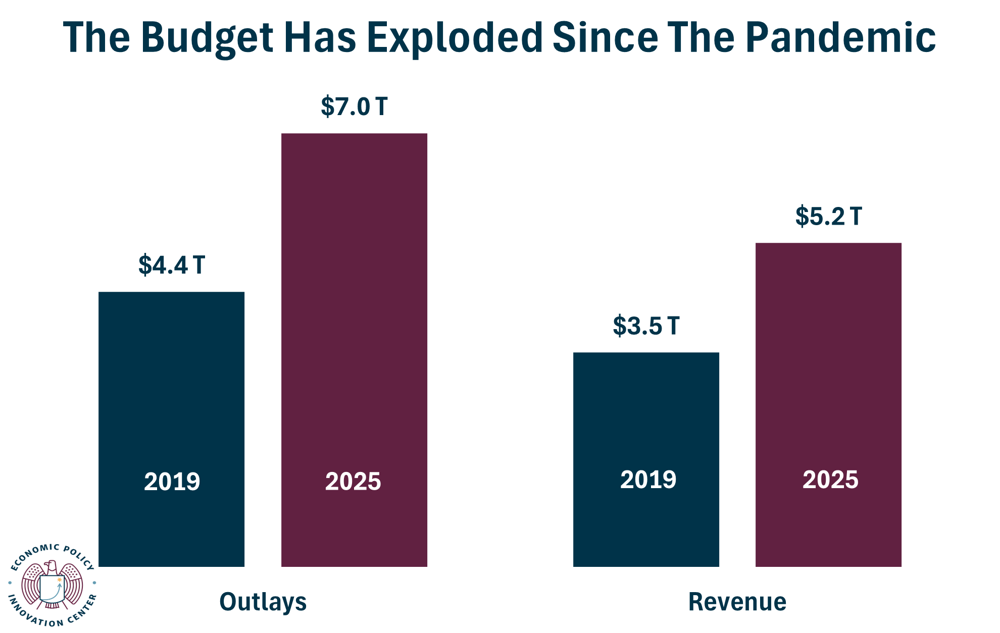
| Revenues | 5,235 | 5,163 | + 72 |
| Outlays | 7,010 | 7,028 | - 18 |
| Deficit | 1,775 | 1,865 | - 90 |
| In billions of dollars. Sources: Congressional Budget Office and U.S. Department of the Treasury. | |||
Chart 1
Source: U.S. Treasury
Debt Higher Than Projected
The national debt at the end of FY 2025 was higher than the CBO projected it would be. The actual debt held by the public at the end of FY 2025 was $30.3 trillion, which was $175 billion higher than the CBO's projection. Meanwhile, total debt was $37.6 trillion, $429 billion above the CBO's projection. Table 2| Trump's 2025 Debt Record | |||
| Actual | CBO Projection | Difference | |
| Debt Held by the Public | 30,278 | 30,103 | + 175 |
| Total Debt | 37,638 | 37,209 | + 429 |
| In billions of dollars. Sources: Congressional Budget Office and U.S. Department of the Treasury. | |||
Revenues Slightly Higher Than Projected
Total revenues were $5.235 trillion in FY 2025, which was $72 billion (1 percent) above the CBO's baseline projection of $5.163 trillion. The Trump Administration enacted several changes to policies that affected revenue collections. This includes imposing new tariffs and reforms to the tax code in the OBBB. It is worth noting that despite the tax cuts in the OBBB, the resulting revenues from individuals and corporations were higher than predicted by the OBBB’s cost estimate from the Joint Committee on Taxation (JCT) and the CBO.[4] The JCT and CBO said that FY 2025 individual and corporate revenues would be $131 billion below the CBO's January baseline. In reality, these revenues were only $37 billion below the CBO's baseline, meaning that the JCT and CBO's scoring of the OBBB was off by more than $94 billion.Customs Duties
Customs duties totaled $195 billion in FY 2025, which was $114 billion (142 percent) above the CBO's baseline projection of $80 billion. New tariffs imposed by President Trump had a significant effect on customs duty collections. Average effective tariffs have reached the highest level since 1943, according to the Tax Foundation.[5]Individual and Payroll Taxes
Individual income taxes totaled $2.656 trillion in FY 2025, which was $35 billion (1 percent) above the CBO's baseline projection of $2.621 trillion. Payroll tax collections totaled $1.748 trillion in FY 2025, which was $10 billion (1 percent) below the CBO's baseline projection of $1.759 trillion. The OBBB extended important expiring tax policies for individuals, such as the expanded standard deduction and the 199A deduction for passthrough business income. The CBO and JCT estimated the policies related to the individual income tax code would reduce revenues in FY 2025 by about $30 billion compared to the CBO's January baseline, meaning the OBBB score was off by $65 billion.Corporate Taxes
Corporate tax revenues totaled $452 billion in FY 2025, which was $72 billion (14 percent) below the CBO's baseline projection of $524 billion. The OBBB reinstated and expanded important provisions allowing businesses to deduct expenses for research and development and for other investments. The CBO and JCT estimated these policies would reduce revenues by about $100 billion in FY 2025 compared to the CBO's January baseline, meaning the OBBB score was off by $28 billion.Outlays Slightly Lower Than Projected
Total outlays were $7.01 trillion in FY 2025, which was $18 billion (0.3 percent) below the CBO's baseline projection of $7.028 trillion. The primary reason outlays were lower than the CBO's original projection were due to the OBBB's reforms to student loan programs. Reversing Biden's student loan cancellation plans saved taxpayers more than $130 billion. Under the accounting rules for loan programs, these savings were booked in September 2025. Without these savings in the Department of Education, FY 2025 spending would have increased about by $113 billion above the CBO's baseline projection.Department of Education
Outlays for the Department of Education totaled $34.7 billion in FY 2025, which was $98.7 billion (74 percent) below the CBO's baseline projection of $133.4 billion. The reduction in outlays below the baseline projection was largely due to the accounting rules related to reversing President Biden's student loan cancellation scheme. Under the Federal Credit Reform Act (FCRA), changes in loan subsidy programs are recorded in the budget on a net present value basis, meaning all of the future fiscal effects are booked at the time of the change in policy at a discounted rate. The Treasury recorded a $131 billion outlay reduction in September 2025. The CBO estimated the student loan reforms in the OBBB would reduce outlays by about $154 billion in FY 2025.USAID and International Affairs
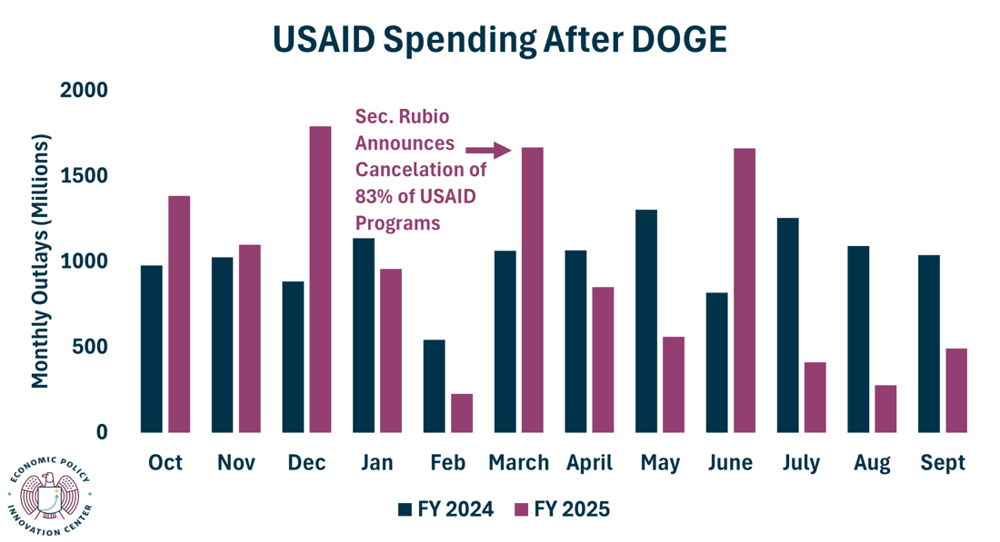
International affairs programs were a major focus of DOGE. The Trump Administration announced that the U.S. Agency for International Development (USAID) would be wound down and personnel would be placed on administrative leave beginning February 23, 2025.[6] Secretary of State Marco Rubio said in March that the Administration was "officially cancelling 83% of the programs at USAID."[7] Despite the pronouncements, USAID spending continued throughout the remainder of the fiscal year. Outlays for USAID totaled $11.4 billion in FY 2025, which was $2 billion (15 percent) below the CBO's baseline projection of $13.4 billion.Chart 2
Source: U.S. Treasury
Other Administration efforts to reform foreign aid programs produced substantial savings for the taxpayers. The Rescissions Act of 2025, enacted on July 24, 2025, rescinded $8 billion of international affairs funding.[8] The Administration also "pocket rescinded" another $4.9 billion in foreign aid program funding at the end of FY 2025.[9] Outlays for International Security Assistance Programs totaled $14.5 billion in FY 2025, which was $3.4 billion (18 percent) below the CBO's baseline projection of $18.9 billion. Outlays for other foreign aid programs (other than International Security Assistance or USAID) totaled $18.4 billion in FY 2025, which was $18.6 billion (50 percent) below the CBO's baseline projection of $36.9 billion.Health Care Programs
Outlays for the major health care programs significantly exceeded the CBO's baseline projections. Outlays for Medicare totaled $997 billion in FY 2025, which was $46 billion (5 percent) above the CBO's baseline projection of $951 billion. Outlays for Medicaid totaled $668 billion in FY 2025, which was $12 billion (2 percent) above the CBO's baseline projection of $656 billion. Outlays for Obamacare premium tax credits totaled $129 billion in FY 2025, $6 billion (5 percent) above the CBO's baseline of $123 billion.Defense
Outlays for defense programs totaled $917 billion in FY 2025, which was $33 billion (4 percent) above the CBO's baseline projection of $884 billion.Veterans’ Benefits and Services
Outlays for veterans' programs totaled $377 billion in FY 2025, which was $19 billion (5 percent) above the CBO's baseline projection of $358 billion. The CBO stated there was "increased spending per person and veterans’ increased use of health care facilities."[10]Interest Payments
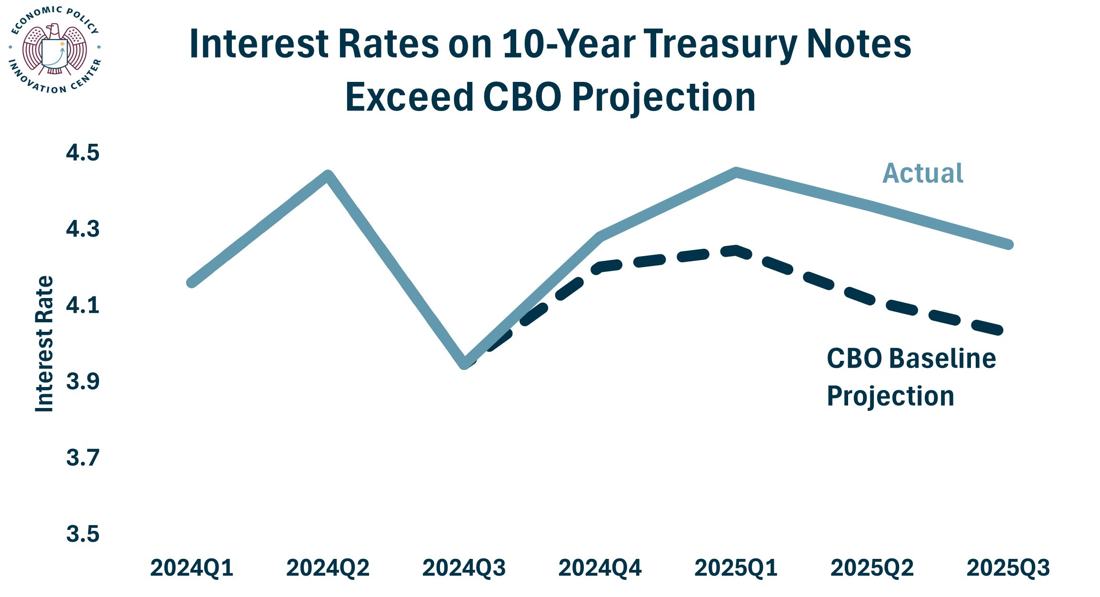
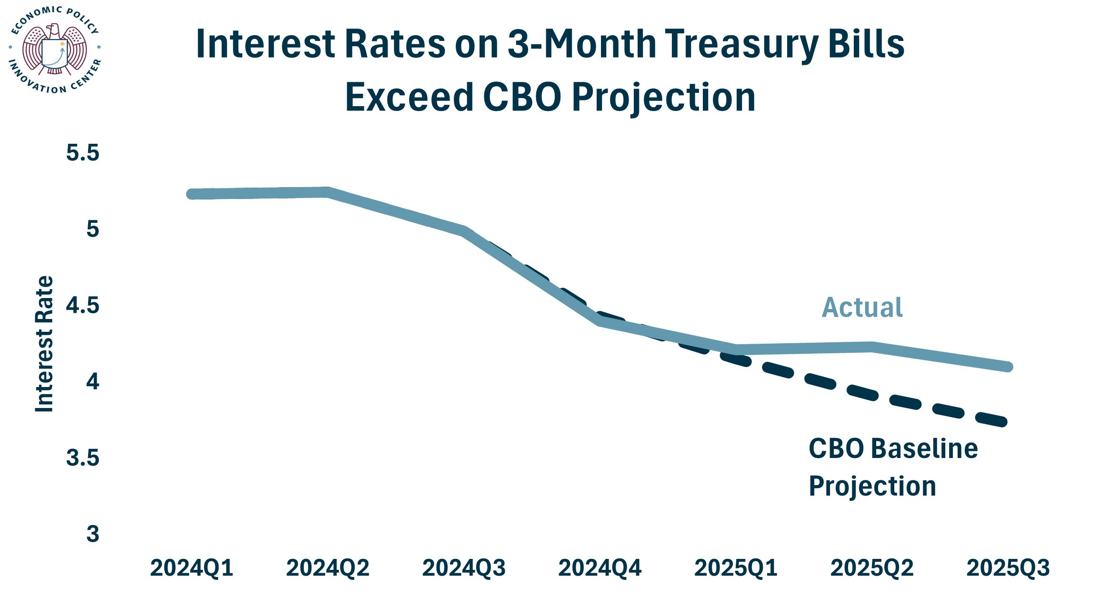
Outlays for net interest totaled $970 billion in FY 2025, which was $18 billion (2 percent) above the CBO's baseline projection of $952 billion. A key reason for higher interest outlays is that actual interest rates exceeded the CBO's baseline economic projections. The average interest rate on 10-year Treasury Notes in the third quarter of calendar year 2025 was 4.26 percent, while the CBO's projection was 4.03 percent.[11] The average interest rate on 3-month Treasury Bills in the third quarter of calendar year 2025 was 4.1 percent, while the CBO's projection was 3.73 percent.[12] Higher interest rates have the potential to add considerably to the budget deficit through interest payments and other feedback effects. This increase in rates relative to projections may represent additional risks associated with maintaining a large stock of debt.Chart 3
Sources: CBO and FRED
Chart 4
Sources: CBO and FRED
Disaster Relief
Spending on disaster relief programs significantly exceeded the CBO's baseline projections. Outlays from the FEMA Disaster Relief Fund totaled $52 billion in FY 2025, which was $13 billion (34 percent) above the CBO's baseline projection of $39 billion. Outlays for Small Business Administration Disaster Loans totaled $9.5 billion in FY 2025, which was $8 billion (695 percent) above the CBO's baseline projection of $1.2 billion. The American Relief Act was enacted on December 21, 2024.[13] This legislation provided $110 billion in supplemental emergency appropriations, in response to Hurricanes Milton and Helene and other disasters. With the supplemental appropriations package enacted shortly before the release of the CBO's January Budget and Economic Outlook, the CBO may not have fully accounted for the increased outlays for disaster programs in its baseline.CHIPS Act
Outlays for the National Institute of Standards and Technology (NIST) totaled $16 billion in FY 2025, which was $11 billion (229 percent) above the CBO's baseline projection of $5 billion. The increase in spending is largely due to the CHIPS and Science Act, which provides subsidies for domestic semiconductor production.[14]Immigration Enforcement
Immigration enforcement has been a significant priority of the Trump Administration. The OBBB provided substantial resources for the Department of Homeland Security to address the chaos at the border and to enforce the nation's immigration laws. However, spending on immigration enforcement did not significantly exceed the CBO's baseline projections. Outlays for U.S. Customs and Border Protection totaled $21.235 billion in FY 2025, which was $42 million (0.2 percent) above the CBO's baseline projection of $21.193 billion. Outlays for U.S. Immigration and Customs Enforcement totaled $10.7 billion in FY 2025, which was $715 million (7 percent) above the CBO's baseline projection of $10 billion.Was DOGE Successful?
The Administration acknowledged that DOGE had disbanded by November 2025, eight months ahead of schedule.[15] DOGE claimed to have saved $214 billion through October 2025, via a “combination of asset sales, contract/lease cancellations and renegotiations, fraud and improper payment deletion, grant cancellations, interest savings, programmatic changes, regulatory savings, and workforce reductions."[16] The topline claim of DOGE's savings is difficult to validate given available data.[17] Some of the discrepancy may be due to mixing different types of budgetary concepts in DOGE's reporting. Some of the claimed savings, such as grant cancellations, may not net any actual fiscal savings if the funds are reused by the agency for a different grant. While cancelling a wasteful grant and repurposing the funds to a more worthwhile project is good governance, it does not reduce budget authority or outlays. Furthermore, many of DOGE's savings may accrue over time rather than appearing in the FY 2025 budget data, such as lease and contract cancellations and the reduction in the federal workforce. Since January 2025, total federal employment has fallen by 259,300. The vast majority of this decrease occurred in October, when 162,000 federal employees who accepted deferred resignation offers left the payrolls.[18]Are Claims About Unlawful Withholding of Hundreds of Billions of Funding Valid?
At the same time, some claims that the Trump Administration has unlawfully prevented hundreds of billions in spending seem to be overblown. Ranking Member of the House Appropriations Committee Rep. Rosa DeLauro (D-CT-03) and Vice Chair of the Senate Appropriations Committee Sen. Patty Murray (D-WA) claim that President Trump and Office of Management and Budget (OMB) Director Russ Vought have inappropriately withheld $410 billion in appropriated funds.[19] The House and Senate Democratic Appropriations Committees published a database of 124 programs they claim have been cancelled, terminated, or frozen. The largest example in the database is $96.7 billion in grant programs administered by FEMA, which are alleged to be frozen. According to the CBO's baseline, total FEMA outlays in FY 2025 were only projected to be $58.4 billion. Actual FEMA outlays were $62.6 billion. The second largest example is $42.5 billion in allegedly frozen funding for the Broadband Equity, Access, and Deployment (BEAD) program, which is administered by the National Telecommunications and Information Administration (NTIA). The CBO's January baseline only projected $2.2 billion in outlays for the entire NTIA in FY 2025. Actual outlays for the NTIA totaled $1.4 billion. The BEAD program was established by the Biden Administration, which identified it as central to the “Bidenomics” agenda.[20] However, no households were connected to the internet by BEAD during the Biden Administration, in part due to "restrictions that the [Biden] Administration has placed on the awards (including attempts by the Department of Commerce to enforce rate regulation of the internet)."[21]Congress and President Trump Should Lock in Spending Savings
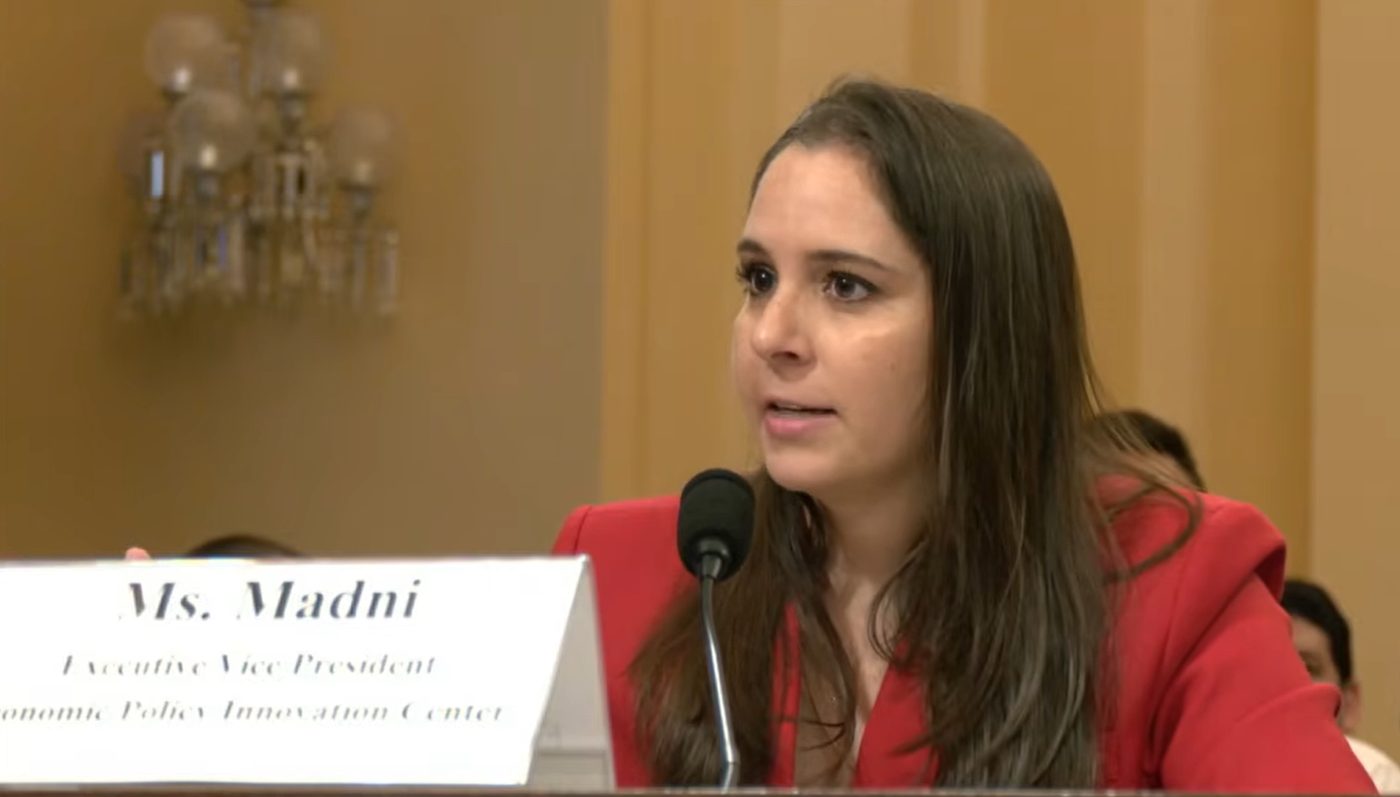
In testimony before the U.S. House of Representatives Oversight and Government Reform DOGE Subcommittee, I identified five tools that can be used to control spending:[22]1. Control Appropriations
The most straightforward way to control waste, fraud, and abuse is by controlling agency budgets through the annual appropriations process. President Trump’s FY 2026 discretionary budget request identified $163 billion in year-one savings. Using the CBO’s baseline rules, these savings would multiply to about $1.8 trillion over the ten-year budget window if Congress implements and continues these savings.2. Reduce Federal Employment
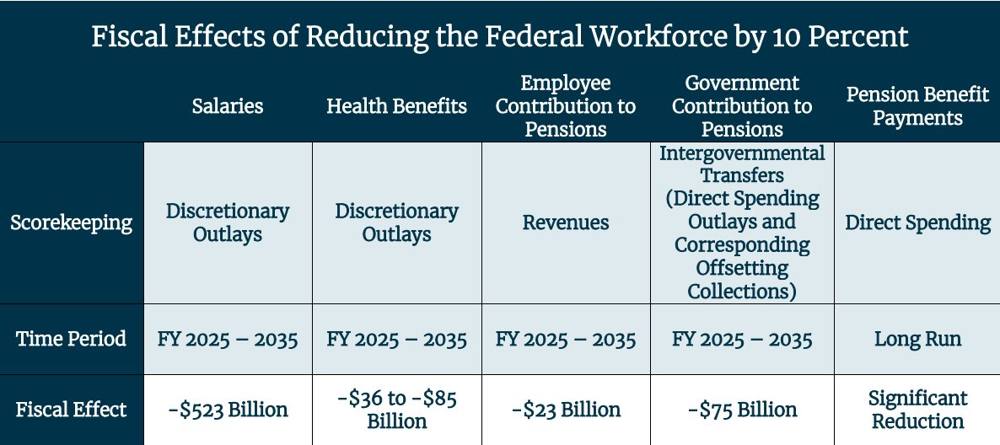
Reducing federal employment is one of best ways to reduce agency budgets and long run liabilities. During the recent government shutdown, more than 650,000 federal bureaucrats (about 30 percent of the workforce) were designated as nonessential.[23] I estimate that permanently reducing the federal workforce by 10 percent over a three-year period would allow discretionary spending appropriations for salaries and health benefits to be reduced by $559 to $608 billion over the next decade.[24] Over the longer run, direct spending outlays would be significantly reduced as pension liabilities fall.Table 3
 With the success of the deferred resignation program and the downsizing of the federal workforce, the Trump Administration is well on its way to realizing important results. Congress must commensurately reduce appropriations for salaries and expenses accounts to lock in savings and prevent these roles from being backfilled by new bureaucrats.
Chart 5
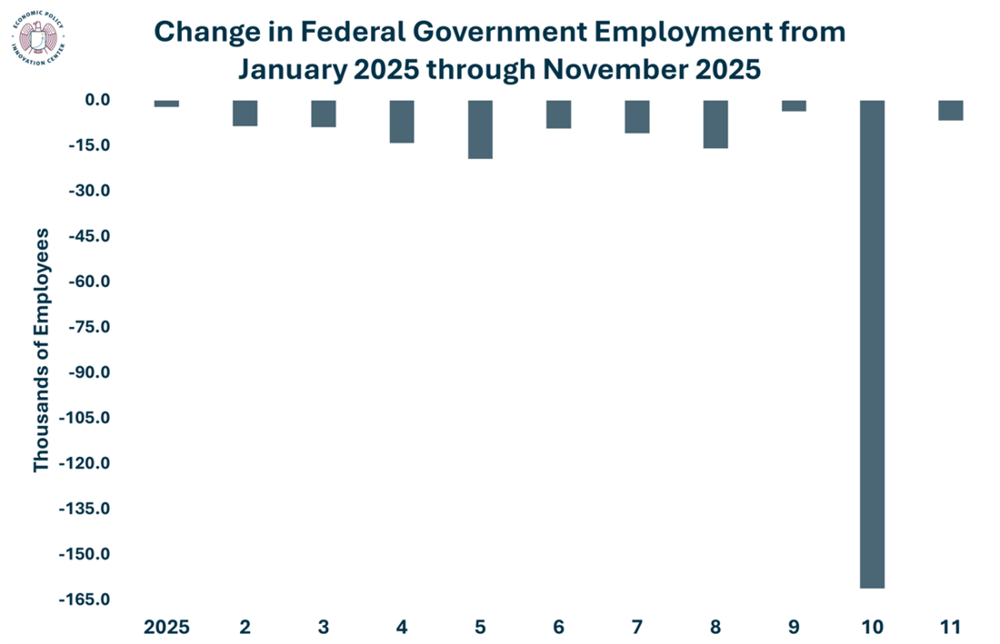
Source: Bureau of Labor Statistics
3. Review Authorizations
While the Appropriations Committee takes the lead in reducing the funds provided to agencies, the Congressional authorizing committees have an important role to play as well. The scope of authorized agency activities should also be properly limited to what is necessary and proper to carry out core programs.4. Implement Rescissions
Rescissions are a powerful tool to eliminate waste, fraud, and abuse by cancelling unneeded funds. The Impoundment Control Act creates an expedited rescission process that is initiated by the President, which bypasses the Senate filibuster. The House and Senate Appropriations Committees have proposed more than 100 rescissions totaling $57.1 billion in the FY 2026 appropriations bills.[25] These rescissions should be passed as standalone legislation to reduce the deficit rather than being tucked into appropriations bills to hide higher discretionary spending.5. Utilize Reconciliation
One of the most important tools at Congress’s disposal to achieve budget savings is the fast-track reconciliation process.[26] Autopilot spending programs, which are the drivers of the unsustainability of the budget, can be adjusted in reconciliation legislation. (However, Social Security may not be changed in reconciliation, nor can interest payments be directly modified.)Conclusion
President Trump slightly increased federal revenues and reduced spending compared to the CBO's projections for FY 2025. However, the burden of government spending and taxes continues to grow at an unsustainable pace. The growing national debt risks eroding the government’s fiscal space, which is its capacity to borrow without undermining debt sustainability or risking a loss of market confidence.[27] This fiscal limit can be considered the government’s true debt limit. When the fiscal limit is approached, a debt spiral can occur. The federal government's fiscal trajectory is unsustainable, but not irreversible. Congress must partner with President Trump to reduce wasteful government spending and avert a fiscal disaster. Lawmakers should control annual appropriations, reduce non-essential federal employment, implement rescissions of wasteful spending, and utilize the reconciliation process.Methodology
A logical approach to gauge the impact of changes in policy and the economy is to compare the actual results to what analysts expected prior to the new Administration. The Congressional Budget Office's (CBO) Budget and Economic Outlook: 2025 to 2035 was released on January 17, 2025, just three days prior to the inauguration of President Trump's second term.[28] The CBO based its fiscal and economic projections on the laws in effect as of January 6, 2025, providing a relatively clean slate just prior to any of President Trump's policy agenda being enacted. This report compares the actual outlays and revenues reported by the U.S. Treasury for fiscal year 2025[29] to the baseline levels projected by the CBO in its January Outlook. It is worth noting that the Trump Administration was only in office for part of FY 2025. The federal fiscal year begins on October 1 of the preceding calendar year, meaning President Biden governed for nearly four months of the fiscal year. Furthermore, policies enacted by the Biden Administration may have unalterably influenced revenues and outlays in ways that the CBO did not anticipate in its baseline. The methodology in this report is consistent with the methodology used in EPIC reports evaluating the Biden Administration's fiscal record in FY 2023[30] and over the FY 2021 to 2024 period.[31]Appendix: Differences in Actual FY 2025 Outlays and the CBO Baseline Projection
The table below provides a summary of the differences in actual FY 2025 outlays compared to the CBO's January 2025 baseline for significant budget functions, agencies, accounts, and programs.| FY 2025 Outlays vs CBO Baseline | ||||
| Function / Account / Program | Actual | CBO Projection | Difference | Percent Difference |
| Medicare | 996,719 | 950,641 | 46,078 | 5% |
| Defense | 916,649 | 883,821 | 32,828 | 4% |
| Veterans’ Benefits and Services | 377,162 | 357,760 | 19,402 | 5% |
| Treasury Bureau of the Fiscal Service | 25,409 | 6,702 | 18,707 | 279% |
| Net Interest | 970,359 | 952,261 | 18,098 | 2% |
| Disaster Relief Fund | 51,929 | 38,764 | 13,165 | 34% |
| Medicaid | 668,139 | 655,870 | 12,269 | 2% |
| National Institute of Standards and Technology | 16,336 | 4,959 | 11,377 | 229% |
| Small Business Administration Disaster Loans | 9,502 | 1,195 | 8,307 | 695% |
| Obamacare Premium Tax Credit (PTC) | 129,260 | 123,430 | 5,830 | 5% |
| HUD Public and Indian Housing Programs | 49,358 | 44,426 | 4,932 | 11% |
| Environmental Protection Agency | 36,976 | 32,983 | 3,993 | 12% |
| USDA Farm Service Agency | 10,196 | 7,456 | 2,740 | 37% |
| Earned Income Tax Credit (EITC) | 66,007 | 63,438 | 2,569 | 4% |
| Children's Health Insurance Program (CHIP) | 23,067 | 20,554 | 2,513 | 12% |
| Social Security | 1,580,686 | 1,578,446 | 2,240 | 0% |
| PBGC Pension Benefit Guaranty Corporation Fund | -3,917 | -5,717 | 1,800 | -31% |
| HUD Project-based Rental Assistance | 17,151 | 16,067 | 1,084 | 7% |
| Transportation | 145,804 | 144,771 | 1,033 | 1% |
| Crop Insurance | 13,805 | 12,832 | 973 | 8% |
| U.S. Immigration and Customs Enforcement | 10,700 | 9,985 | 715 | 7% |
| IRS Enforcement, Operations Support, and Taxpayer Services | 17,847 | 17,265 | 582 | 3% |
| Child Tax Credit (CTC) | 26,567 | 26,184 | 383 | 1% |
| National Science Foundation | 9,949 | 9,582 | 367 | 4% |
| HHS Health Resources and Services Administration | 15,080 | 14,727 | 353 | 2% |
| Military retirement fund | 80,465 | 80,300 | 165 | 0% |
| U.S. Customs and Border Protection | 21,235 | 21,193 | 42 | 0% |
| National Institutes of Health | 47,341 | 47,326 | 15 | 0% |
| Bureau of Consumer Financial Protection | 2,737 | 2,746 | -9 | 0% |
| Centers for Disease Control and Prevention | 11,405 | 11,461 | -56 | 0% |
| General Services Administration | -375 | -261 | -114 | 44% |
| Supplemental Security Income (SSI) | 69,472 | 69,694 | -222 | 0% |
| Child Care and Development Block Grant | 10,779 | 11,021 | -242 | -2% |
| Food and Drug Administration | 3,284 | 3,549 | -265 | -7% |
| NASA | 24,576 | 24,893 | -317 | -1% |
| Substance Use And Mental Health Services Administration | 8,337 | 8,755 | -418 | -5% |
| Civil service retirement and disability fund | 110,250 | 111,051 | -801 | -1% |
| National Telecommunications and Information Administration | 1,443 | 2,247 | -804 | -36% |
| Refugee and entrant assistance | 5,822 | 7,448 | -1,626 | -22% |
| Migration and refugee assistance | 3,246 | 5,000 | -1,754 | -35% |
| USAID | 11,372 | 13,409 | -2,037 | -15% |
| Training and employment services | 1,801 | 3,923 | -2,122 | -54% |
| Food Stamps | 106,335 | 109,641 | -3,306 | -3% |
| Department of Energy - Energy Programs | 21,662 | 25,029 | -3,367 | -13% |
| International Security Assistance Programs | 15,413 | 18,853 | -3,440 | -18% |
| Flood Insurance | 7,351 | 11,837 | -4,486 | -38% |
| FDIC Deposit Insurance | -31,162 | -24,184 | -6,978 | 29% |
| Other IRS | 51,277 | 60,077 | -8,800 | -15% |
| All Other | 192,065 | 264,393 | -72,328 | -27% |
| Total | 7,009,974 | 7,028,144 | -18,170 | 0% |
| In millions of dollars. Sources: Congressional Budget Office and U.S. Department of the Treasury. | ||||